

Julia Watson – Designer, Activist, Academic, and Author
Watson is dedicated to integrating indigenous knowledge into urban design and architecture to build a more sustainable and ethical future.

Germany
Kate Klaver July 29, 2021 — REVISED JUNE 2026
After growing up in Wittenberg, Germany, Christian Kroll attended Nuremberg University to study business administration. It wasn’t until he took a trip to Nepal that his outlook on deforestation, destructive businesses and inequality was transformed. He returned to Germany with a new perspective, leading him to found Ecosia.
Widely acclaimed and awarded for its innovative and sustainable initiatives, Ecosia is a search engine created with the intention of tackling the concerns of climate change. A proponent of the idea that every search counts, Ecosia turns simple everyday searches into large, meaningful action. Every search removes 1 kg of CO2 from the atmosphere, and with roughly 50 searches, Ecosia plants one tree in regions around the world that are in desperate need of reforestation. Ecosia plants trees in places such as Cameroon, Nigeria, Peru, Indonesia, Spain, Ethiopia and many more. Each location poses a specific set of challenges—some of which include drought, desertification, deforestation, endangered species and erosion. Working with partners across multiple countries, Ecosia plants trees to restore land, protect native endangered species and vital ecosystems, and support local farmers and communities.
Between its own solar plants and tree-planting mission, Ecosia’s servers run on 200% renewable energy, making the search engine carbon-negative. In June 2019, Ecosia achieved the milestone of planting 60 million trees—that number has since surpassed 250 million and continues to grow by the hour. But Ecosia’s ethical practices also reach far beyond planting trees. With a privacy-friendly website and a monthly financial report, Ecosia values safe, secure and transparent searching for its users. The search engine uses more sustainable AI models that are smaller, faster and more energy efficient than mainstream models. Partnering with European companies that support their mission, Ecosia separates itself from partisan agendas and builds a more private browser that leaves a lighter environmental footprint—while simultaneously producing more renewable energy than is needed to operate its models.
In 2018, Kroll chose to never sell Ecosia or take profits out of the company, prioritizing impact over profit. Being the first certified German B-Corp, Ecosia has led the way for German businesses and continues to pioneer in the fight against climate change. Amid growing environmental concerns, Kroll and Ecosia bridge the gap between environmental protection and technological advancement.
Mood of Living: Where did you grow up?
Christian Kroll: I grew up in Wittenberg, in the former East Germany.
MoL: Where do you currently reside?
CK: In Berlin, Germany.
MoL: Where did you go to school? What did you study?
CK: I went to Nuremberg University where I studied business administration.
MoL: What motivated your shift from studying business to focusing on deforestation?
CK: The dot-com bubble was at its height when I was in high school, and I got really interested in the stock market, which led me to take business studies at university. While I was studying, I started a couple of websites, so I was also interested in tech and the internet. But it was after my studies, while I was traveling, that the idea for Ecosia took shape. I witnessed massive inequality in Nepal and massive deforestation in South America. I started to question my choices and came to understand that business doesn’t always contribute to the well-being of people — and in fact can be harmful. I returned to Berlin knowing I wanted to start a social business that would put its profits into tackling climate change and social inequality.
Ecosia’s restoration of forests on former palm oil plantations, particularly using the native and endangered Durio tree species, helps combat the detrimental effects of the palm oil industry in Indonesia.
MoL: When did you travel to India, and what inspired you to do so? How did your travels influence your personal and professional life?
CK: I had traveled to India briefly during my studies, which really opened my eyes up to the world. I knew I wanted to go back, so straight after I finished my studies, I headed to Nepal for six months and, after that, to South America. My travels were a pivotal moment for me, as I started to really think about my individual impact and how I could contribute to a better world. This led me back to Germany to start Ecosia.
MoL: What was your previous experience with search engines? What inspired you to create Ecosia, a sustainable search engine?
CK: While I was studying, I started a website which compared banking services, and through this project, I came to realize that most of the money I was earning I was giving back to Google for advertisements. In Nepal I started a search engine with the goal of financing development projects. It didn’t take off due to difficult conditions, like a lack of steady internet connection and not many people with access to the internet, but it only made me more determined to build a social business. With Ecosia, I combined the profitable business model of a search engine together with the purpose of tackling climate change.
Ecosia combats rapid deforestation in Peru through reforesting mountain ranges and encouraging regenerative agriculture for local farmers.
MoL: What struggles or challenges did you face when first creating Ecosia?
CK: At first, we tried to put all of our revenues into ecological projects, but this meant we couldn’t pay ourselves, let alone grow our team. When we switched to paying our operational costs first and then channeling profits into reforestation, the business started to grow. This also meant we had some profits left over for other green investments, like our own solar power plants.
MoL: How have you been able to make powering your search engine more environmentally friendly? How does Ecosia set itself apart from other search engines?
CK: A key difference from other search engines is that we turn searches into trees. We’re also carbon-negative. While our trees in the field are capturing carbon, we’ve built enough solar plants to produce more than twice as much electricity as is required to power all Ecosia searches with renewables. This means every search with Ecosia is crowding out dirty energy from the grid.
Deforestation in Ghana has led to the drying of the Daka river, which many villages rely on. Ecosia has paired with Tree Aid to grow trees along the river to restore water, prevent erosion and provide food to the local communities.
MoL: What about privacy and transparency? How do you protect your users’ data?
CK: Privacy has always been really important for us — we’re interested in tree data, not our users’ data. Searches are never stored permanently, no personal profiles are created based on search history and all searches are securely encrypted and anonymized within days. Ecosia also never uses external tracking tools and never sells data to advertisers.
MoL: What does being a “social business” mean to you?
CK: It means existing for stakeholders, not shareholders. It’s clear that if you’re making decisions based on maximizing profits for shareholders, you’re putting profit ahead of people and the planet. If we want to tackle the climate crisis, this absolutely needs to be the other way around. It also means our choices are not dictated by profit-seeking influences. We can make choices that are aligned with our purpose and values and with our ultimate goal: to regenerate the planet as quickly as possible.
Ecosia plants trees near water towers in Kenya, helping to increase both the quality and the quantity of the water and to prevent erosion.
MoL: Why was it important to you to get Ecosia certified as a B-Corporation? What are the challenges of becoming a B-Corporation?
CK: When we founded Ecosia in 2009, we promised to prioritize impact over profit. Becoming a certified B-Corporation cemented that promise and put us in the company of a growing movement of pioneering, smart, sustainable businesses. It also helped us to check our values against our actions. It can be a challenge to get everything lined up, but it’s a really worthwhile process. There is a thriving community around it too.
MoL: Being the first German B-Corp, do you find that Germany has more progress to make in the realm of environmental businesses?
CK: There are a lot of great things happening in Germany, in particular a strong purpose movement. I’m constantly meeting other inspiring entrepreneurs, and I’m really excited about the growth in this area. My hope is that Germany will once again become a leader in solving climate change.
Through the implementation of Forest Gardens in Senegal, Ecosia works to diversify food and to increase local income to achieve climate justice.
MoL: What motivated you to make the choice to never sell Ecosia and to not take profits out of the company? Would you encourage other entrepreneurs to do the same?
CK: I’ve never been interested in getting rich. I want to tackle climate change and make a positive difference for future generations. In 2018, I made the decision to make Ecosia a steward-owned company, giving away my shares to the Purpose Foundation and making sure Ecosia can never be sold or have profits taken out of it. This ensures that Ecosia can continue to flourish and fill the world with trees, not fill the pockets of shareholders. I’d definitely encourage others to do the same — it means you are really putting the interests of the people and the planet first.
MoL: In what ways will technological innovation support future environmental initiatives?
CK: I think we already have all the technology we need to solve climate change. In fact, some of the most powerful tools we have to tackle climate change are about as low-tech as it gets, like trees! But what’s missing is the willingness to actually do it. Innovation also needs to go hand-in-hand with purpose and not be driven by profit maximization.
In the harsh desertified land of Burkina Faso, tree-planting helps to restore land fertility, local nutrition and employment.
MoL: What do you envision for your social business going forward?
CK: We want to continue to grow our environmental movement, reaching more people around the world so we can scale up and plant billions of trees. Every tree-planting project has multiple benefits that go beyond the environment and spill over into the community, bringing in employment and income, empowering women and supporting indigenous rights. We’ll continue to encourage climate action and to be vocal against anti-competitive behavior in the tech industry. We also want to keep pioneering a better way to do business and to connect with others doing the same.
MoL: Outside of your work at Ecosia, how do you personally strive to live sustainably?
CK: I take the train instead of flying, don’t eat meat and don’t own a car. I much prefer to cycle around the city! And I don’t buy stuff that I don’t need.
In partnership with the Jane Goodall Institute and Trees for Humanity, Ecosia teaches environmentalism in schools in Uganda and plants corridors of trees for endangered chimpanzees.
MoL: What advice can you give anyone interested in starting his or her own sustainable business?
CK: Persistence pays off. If you’re passionate about your purpose and keep trying, you will eventually find success. Ecosia might be a success story now, but it didn’t happen overnight. I had to try and fail at a few different projects before I found the right mix of timing, business model and connection to my own purpose.
Photography courtesy of Ecosia.
Watson is dedicated to integrating indigenous knowledge into urban design and architecture to build a more sustainable and ethical future.
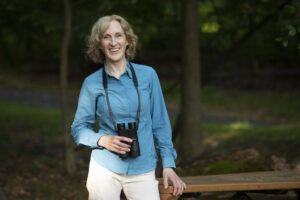
Trained as a scientist and ornithologist, Dr. Gray is the first woman to hold the title of CEO in the organization’s 117-year history.
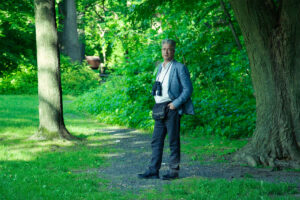
Steven Peck is dedicated to creating greener, healthier & resilient cities with nature & urban agriculture.