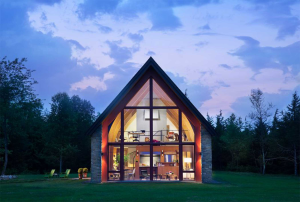
Alan Barlis – Founder and Principal of BarlisWedlick Architects
A pioneer in Passive House design.
Championing architecture’s potential to create an equitable and sustainable future.

India
Mood of Living May 17, 2018 — REVISED JUNE 2026
Founded by Brinda Somaya in 1974, Somaya & Sampat is a multiple award-winning architecture practice that designs schools, business firms and museums and has made countless contributions to the urban landscapes of Indian cities. Somaya herself is a heavily decorated architect, conservationist, educator and activist, and has been recently recognized in the HOT 100 List of Architects and Designers 2025 by Architect and Interiors India and has earned the ET DesignScape Lifetime Achievement Award – Person of the Year 2025. Alongside four other trustees, Somaya founded the Heritage, Education, Conservation, Architecture and Restoration (HECAR) Foundation, which celebrates Mumbai’s diverse cultural heritage and educates the public on architecture and its connection to social and urban issues through talks, seminars and more.
Somaya’s ethos is one based on caring for people, culture and habitat. Her design practice is rooted in traditional Indian architecture and considers how humans inhabit space and how space shapes humans. Working on sites like the Maharashtra Nature Park that connects residents of Dharavi and neighboring areas to their environment and the Cathedral & John Connon School that preserves cultural and historical Indian heritage through its restoration, Somaya insists that architecture cares for both people and place. Through her mindful design practices and dedication to conservation, Somaya has built a name for herself as a prolific and versatile designer, closely attuned to the cultural, social and environmental challenges and responsibilities of an architect working in India.
Mood of Living: What inspired you to become an architect?
Brinda Somaya: At the age of eight, my parents took me to Nalanda in Bihar. I think it was perhaps after visiting the ruins of Nalanda that I decided I wanted to be an archaeologist. That was not to be, but perhaps it led to my becoming an architect, and instilled in me the love for history and conservation.
MoL: How did your upbringing influence your decision to go into architecture?
B.S: My sister and I were taken to different parts of India by our parents, and our childhood was spent getting exposure to the different facets of our culture. Hence, architecture was always on my mind, and there was never any debate or second choice regarding what I would take up as my profession.
MoL: What (if any) challenges did your gender present as you sought to establish yourself as an architect? Is it any easier for women to enter the field today?
B.S: I didn’t begin my practice thinking about difficulties. At that young age, one begins one’s work being much more positive about life. Difficulties exist in every profession for every human being. I don’t think we should start worrying about the negativities in one’s life, but rather, focus on how to move ahead in a positive manner. That has been my attitude and it still is.
Today, women architects are many, and they work in urban areas on complex and large projects. Of course, being a woman means that there are always personal issues which have to be worked out with the family and home. Today, you see many independent women architects and designers, and the numbers keep on increasing, thus reducing the gender gap.
Bhadli Village, which Somaya and her firm helped reconstruct after earthquake damage.
MoL: You have designed everything from academic institutions, to corporate buildings, to places of worship, as well as reconstructing a village devastated by an earthquake. How are you able to design such a wide variety of projects? What is the thought process before you tackle a project?
B.S: I think one of the most important things, which is not intentional but which just happened over a period of time with my practice, is the diversity of projects, and that’s because no job or no project was too small or too big for us to do. It didn’t matter if it was a paid project or a pro bono project. I always believed that one will balance the other and that is why we have a huge diversity of work.
So, I think that the most amazing and wonderful part of being an architect in a country like India is that we can work with diverse ecology, ecosystems, topography, people, cultures, religion, and craftsmanship. No other country in the world has such a rich mix of all this. So we are truly lucky to be working here.
MoL: Who has inspired and influenced you in your life and work?
B.S: I think each one of us has inherited everything that is around us and that is a part of our own being. So, it’s not necessary that we have to look outside for inspiration. Inspiration comes from within us, also. We are who we are because of all the things that surround us. Our culture, the past, the present, the future. Every project has to come from within the architects’ thoughts, ideas and dreams.
The Bhadli Village School, designed by Somaya’s firm as part of the post-earthquake reconstruction project.
MoL: You describe yourself as an urban conservationist. What does this mean?
B.S: I am an urban Indian architect serving less than 1% of our population. I am also aware that today, the future of our profession is inseparably bound with urban design and town planning. In the larger scheme of things, a single beautiful house or a single fine shopping mall accomplishes very little. Everything depends on the unified organization of life — hence the inter-relations between residence, workplace and leisure can no longer be left to chance. Conscious planning is demanded.
I see myself, and hence, my work straddling the old and the new, the large and the small. While conservation work has its rich rewards, the joy of creating a new building cannot be underestimated, and both have to have a sense of place.
MoL: How do you take into account factors like environmental awareness, sustainability, social responsibility and experience when designing a project? What other factors are important in the design process?
B.S: For me, an architect’s responsibility and an architect’s role goes much beyond buildings. We have to think about many things when we design and build. We also have to protect the built environment, as well as the unbuilt environment, whether it is open spaces or whether it is the natural landscape.
We cannot always build everything anew. It is important to use embodied energy in existing buildings. And while we naturally also want to build green-field projects and design anew, we have to look at each project carefully and understand what is best for all concerned and not just for us to say that we have done something very creative or that we have designed something which is different. It is much more complex than that. It has got to be appropriate for the site, climate and the people one is building for. And, of course, it must give the architect a sense of satisfaction of doing something creative as well.
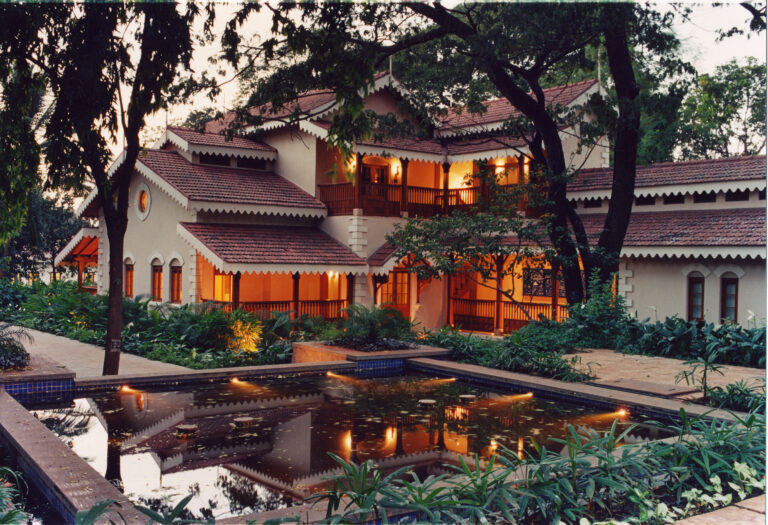
Somaya and her firm oversaw the renovations and upgrades made to Banyan Park on the Tata Consultancy Firm in Mumbai.
MoL: Do you ever encounter difficulties balancing aesthetic with functionality and environmental considerations in your designs?
B.S: That is part of the process of design. We address and resolve the issues.
MoL: How has working in different countries and cultures influenced your view of life? What advice do you have for others in how to create impactful change in society?
B.S: Every part of the world has something to offer. I think the biggest lesson we should learn is to ensure that the inner cities, architecture and plazas have been protected and saved. They have been pedestrianized, the buildings have been restored.
Our role goes beyond buildings, particularly in a country like India. The need has to be a professional concern and empathy with the environment, which would result in an improved quality of life for all of us, rich and poor, urban and rural within our country.
The Tata Consultancy Services campus in Indore.
MoL: How do you balance work and your personal life?
B.S: I have been designing and building for over four decades. During this time, my son, Vikram, and daughter, Nandini, have grown up, gotten married, and had children of their own. My husband, Anand, is a cardiovascular surgeon, and he and I have had busy professional lives. I guess all working mothers have similar issues, but living and working in India provides great family and other forms of support to young working couples. My mother and my husband would support and take care of the children whenever I was traveling. So, essentially, what I am trying to say is that the family has to work together to enable each individual within the family to fulfill his or her dreams.
Nalanda Internatinal Senior School, an eco-friendly primary school.
MoL: We find that creative people are more likely to lead an artistic lifestyle. Did you design your home and interior space?
B.S: I have designed my farmhouse at Alibaug and my apartment in Mumbai.
MoL: What do you like to do in your free time? Do you have any hobbies?
B.S: I enjoy reading, but most of all, traveling to different parts of the world.
MoL: Where do you go for peace of mind?
B.S: My farmhouse.
Apartment at Cuffe Palace, which Somaya’s firm renovated.
MoL: What music inspires you?
B.S: South Indian Carnatic music.
MoL: What advice do you have for people interested in becoming architects?
B.S: I believe that, as architects, we have to have the creativity, we have to dream and believe in many different things, but we finally have to get our project built. This involves a lot of hard work and technical expertise to manage the project and see that it is completed as per what one has envisaged it to be. Architecture is not all fun and games and drawing. It goes much beyond that. I think this is what young people have to realize today. I’m sure they do, but I don’t think that until they work in offices and get responsibilities do they realize the difficulties that come with executing a project.
MoL: Do you have any words of wisdom?
B.S: I do not separate my work from myself. Hence, if I am successful, it is not because I planned to be so. It is because I love with a passion the work I do. It is all what I am.
Photography courtesy by Brinda Somaya
A pioneer in Passive House design.
Championing architecture’s potential to create an equitable and sustainable future.
Watson is dedicated to integrating indigenous knowledge into urban design and architecture to build a more sustainable and ethical future.
Reynolds, an American architect based in New Mexico, is best known for designing and building Earthship passive solar homes.