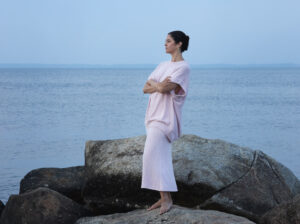
Julia Watson – Designer, Activist, Academic, and Author
Watson is dedicated to integrating indigenous knowledge into urban design and architecture to build a more sustainable and ethical future.

USA
Carter Cohen September 30, 2025
Alan Barlis founded his architectural firm, BarlisWedlick, in 2012. A graduate of MIT’s architecture program, he embraced the principle that great design is inseparable from environmental responsibility. Guided by this belief, he built a practice dedicated to uniting sustainability with design excellence, always prioritizing authenticity and responsibility.
A pioneer in Passive House design and construction, Barlis led his firm in creating the Hudson Passive Project—the first Passive House in New York State and the 11th in the nation to be certified by the Passive House Institute US. He later partnered with Habitat for Humanity to design the Columbia Passive Townhouses, expanding the reach of Passive House design to more accessible and affordable housing.
In addition to his practice, Barlis is an inspiring professor at the City College of New York, where he mentors the next generation of architects to envision and create a more sustainable future.
Mood of Living: Where did you grow up? What were you passionate about as a child? Do you see that reflected in your work today
Alan Barlis: I moved around a lot as a very young child. We lived in Massachusetts, Kansas, and Alabama, to name a few places, and in hindsight, I realize that the idea of a permanent home captured my imagination. I started building forts, playing with blocks and Legos, and eventually drawing fanciful buildings and cities. Fast forward to today, and the same desire, curiosity, and excitement exist when I begin to explore with an individual, a couple, or a family how we’ll design and build their home.
Alan Barlis, Founder and Principal of BarlisWedlick Architects (Photo Credit: Anna Campanelli)
Interior of Hudson Passive Project, completed in 2010 as the 1st certified Passive House in New York State, 11th in the U.S. (Photo Credit: Peter Aaron)
MoL: What inspired you to pursue a degree in sociology at Brandeis University?
AB: Sociology is a way to understand people and communities on a deeper level. I am interested in how people interact with their environments, how culture and society shape where and how we live. I knew that a broad foundation of knowledge was really important for the study of architecture and urban design, and studying sociology gave me a perspective on buildings as places that affect and are affected by people.
MoL: What was the catalyst that led you to switch your focus from sociology to architecture? Did your studies in sociology affect your views on architecture and/or sustainability?
AB: I was always fascinated by the design of areas where we live, work and relax. What was similar, what was different, how these areas overlap and how we socialize. In high school, my curiosity had two paths – reading every book in the Architecture section of my town library (it was a small-town library, so it was a small section) and the practical learning of a few trade classes that taught drafting. So really, I picked Sociology to support my love of architecture. My sociology background definitely helped make me more aware of the social responsibility architecture carries especially around sustainability. It’s not just about buildings being energy efficient but about how they serve communities, budgets, and real human needs.
MoL: How did your studies at MIT impact the way you view architecture? Did you have a mentor?
AB: MIT was transformative. I was thinking critically about performance, technology, and design all at once. I had mentors who emphasized sustainability early on, people who demonstrated that good architecture is inseparable from environmental responsibility. That influence helped shape the path I’d take with Passive House and sustainable design. So many professors shaped my thinking and my future career, but Shun Kanda, my first teacher, and my first boss (he pulled me out of school for a year to work on a project in Japan) was, and is, a tremendous influence. I could see a path forward for myself the minute I stepped into his office.
MoL: What was your career path post-MIT? How did these first jobs influence you going forward?
AB: My post-MIT career path is actually straightforward, so I’ll start with what I did in the 4 years between Brandeis and MIT. I knew I wanted to be an architect for the rest of my life, so I thought about what experiences I could gather before I went to graduate school to enrich that experience and inform my later practice. I lived in Boston, New York City, drove across the country twice, and saw just about every Frank Lloyd Wright project possible. I lived all over California and saw a lot of Europe from a base in Prague. I had many jobs, mostly in urban planning or art installation construction, and also did set design in LA. All of it was incredibly interesting and definitely helped me get into MIT. After MIT, I followed my best friend, Paul Dreher, to NYC, where he was working with Dennis Wedlick, who had just founded Dennis Wedlick Architects. I helped them for what I thought would be a couple of weeks while I was putting my portfolio together and getting ready to apply for jobs. I saw around me a young, exciting firm that shared many of my beliefs, and I never left. In 2005, I became a Principal of the firm, and in 2012, I founded BarlisWedlick Architects, the firm I’m currently leading. An unusually straightforward path that continues to be exciting.
Fox Hall Home, a barn house and a certified Passive House, located in Ancram, NY. (Photo Credit: Brian Ferry)
Interior of Fox Hall Home, showing the open plan dining and living area and kitchen. (Photo Credit: Jonny Valiant)
MoL: What is your philosophy on the role of sustainability in architecture? How did you develop this mindset?
AB: This is a good point to take a minute to explain Passive House and specifically how we incorporate the ideas into our design work. Passive House describes a way to construct or renovate a building to make it energy efficient, reduce utility costs and provide comfort through all the seasons. Sustainability and net-zero are related terms. At BarlisWedlick, our intention is that Passive House design principals can be accessible and scalable. Our approach is to integrate sustainability seamlessly with design — not sacrifice beauty or craft.
Paying it forward, this is the curriculum I’ve been teaching at The City College of New York for over a decade, contributing to the many reasons for the increased awareness of incorporating Passive House principles in renovation projects and new construction.
What was my path to Passive House? Dennis Wedlick and I were both educated during the end of an era where science wasn’t entirely being applied to architecture. We both care deeply about improving an architect’s role in environmental issues and in our first efforts struggled to accomplish projects that could clearly demonstrate how architecture could be tested to prove improvements in performance, and thereby responsibility to the planet. We incorporated elements of the passive solar strategies we were taught, we studied and implemented construction efficiency with modular and pre-fab projects, and became some of the first LEED accredited practitioners. But it wasn’t until 2006 when we read about Passive House in the New York Times, and then took the Certified Passive House Consultant course, that we found our path forward and I found my architecture focus.
Using Passive House principles in design, BarlisWedlick Architects delivers on the promise of good responsible design. We create buildings that are durable, resilient, and efficient, drawing less energy and therefore creating fewer emissions, both in their operations and their construction. Sustainability is fundamental, not an add-on. It’s about responsibility—to people, to the planet, to future generations.
A single-family home renovation in Westchester, New York designed to meet the Passive House standard. (Photo Credit: Neil Landino)
Interior of a renovated home in Westchester, New York designed to meet the Passive House standard. (Photo Credit: Neil Landino)
MoL: What inspired you to found BarlisWedlick Architects in 2012 and lead an architecture/design firm? What were some of the hurdles you faced during this process?
AB:I wanted to create a practice that prioritized authentic, responsible architecture—where sustainability was central and balanced with design quality. The hurdles of any entrepreneur are mostly the rollercoaster of the market. Wanting to preserve our team during the Great Recession, as talent retention longevity has always been a strong suit for us, we divided the firm into groups that did research about core sustainability principles. That work became the basis of our Hudson Passive Project and a prototype house developed in 2010. We applied the research to a real building and it became the first certified Passive House in New York State, and the 11th in the U.S. We just celebrated the 15th anniversary of that milestone.
MoL: How were you introduced to the Passive Home principles? What kickstarted the Hudson Passive Project?
AB: We were drawn to Passive House because it gave us a codified way to measure sustainability — a clear target that aligns with our values. The Hudson Passive Project (HPP) is a lab where we applied these principles fully, pushed the boundaries, and demonstrated what is possible in architecture, performance, and design. The first project in 2010 was a prototype house design that we had been working on with a repeat client, the development arm of Sciame Construction. This served as the perfect basis for the added understanding of efficiency in energy use and carbon reduction for both the running of the house’s mechanical systems, as well as its construction process. We took some of the earliest classes the Passive House Institute offered, and applied what we were learning to the design. We created our first certified Passive House, the first in New York State, and the 11th in the U.S. All through the process, from developing the design through construction and beyond into post-occupancy, we used HPP as an educational tool. We were the first to present the Passive House concepts to NYSERDA (New York State Energy Research and Development Authority), and arranged as many events introducing various communities to the topic as well. We invited the public and the media to the barn-raising event central to HPP’s construction, and toured dozens of groups through the project during and after completion. NYSERDA gave us a grant to monitor the performance for a year after it was built, and we presented these findings at the national conference of the American Institute of Architects (AIA), among other venues. This work changed the trajectory of our firm, as we apply Passive House principles to every project since.
This work also became the basis of my teaching at The City College of New York for a class about sustainable design I’ve taught to graduate and undergraduate students for over a decade. The body of work that resulted was the basis for my attainment of Fellow status in the AIA.
I like to believe that I’m paying the knowledge and experience forward and that a future generation of architects and designers will help to further expand awareness and implementation.
A home on Shelter Island transformed into a small, serene retreat and designed using Passive House principles. (Photo Credit: Chris Mottalini)
Interior of a home on Shelter Island transformed into a small, serene retreat and designed using Passive House principles. (Photo Credit: Chris Mottalini)
MoL: How do you approach each Passive project? Is the process different for each building?
AB: Absolutely, each project is unique. While Passive House gives us a framework, we always tailor solutions to the family’s needs, site conditions, and budget realities. Sustainability is embedded in every decision, but it has to make sense for each situation. We collaborate closely with the family or owner and builders to find the best balance. We spent the first years, after completing HPP, testing how Passive House principles would work with different case studies. We sought out projects with different budgets, different locations and climatic conditions, different typologies (residential, commercial, institutional, hospitality, etc.) and different construction conditions, like renovation versus new construction. We called this the “green-eggs-and-ham” era of our Passive House advocacy. We were especially proud to demonstrate how this work could apply to and be extremely helpful to affordable housing. We teamed up with the Columbia County chapter of Habitat for Humanity and created a prototype for multi-family units that we’ve been developing and improving for years. The extremely low energy demand assists their first-time homeowners to ease high housing costs, while also creating a home that is resilient, quiet, and has vastly improved indoor air quality. Another challenge is renovation work, which is harder than new construction, but entirely possible. Our Westchester Passive House Project demonstrates that, with thoughtful planning, a house can be retrofitted to meet certification standards and accomplished in phases over time to allow homeowners to meet challenging schedules, like being home for the school year.
MoL: What was the process like collaborating with Habitat for Humanity to create the Columbia Passive Townhouses? How did this collaboration impact the final design and budget?
AB: Working with Habitat for Humanity was rewarding because it pushed us to think about affordability alongside sustainability. It was a balancing act to meet Passive House standards within tight budgets, but it showed us how sustainable design can be accessible and scalable. The most unique aspect of working with Habitat for Humanity is that a lot of the construction labor is conducted by untrained people, either those donating their time, or sweat equity by the future homeowners themselves, as is a requirement of Habitat for Humanity. We had to build into our design a way to ensure that the Passive House principles would still be met, as most of them are employed in the building envelope, or shell. Clear directions, simple and repeatable details, and site supervision are all key components to a successful build, and this project helped us hone our skills to that end.
West Village Townhouse, a 19th-century brownstone in Manhattan designed to meet the Passive House standard. (Photo Credit: Joshua McHugh)
Interior of West Village Townhouse, showing the Main Bathroom in the 19th-century brownstone in Manhattan designed to meet the Passive House standard. (Photo Credit: Joshua McHugh)
MoL: What have you learned from creating so many Passive Homes? What do you envision for the future of Passive Homes? Do you see them becoming more accessible?
AB: We’ve learned that Passive Homes can be beautiful, adaptable, and cost-effective. The idea of Passive House is not just a technical exercise. The future is hopeful: with growing awareness, more locally made product availability, and increased familiarity among the construction industry, Passive House principles will become more mainstream and more cost-efficient. As it is, we believe, teach, and implement that the costs for a Passive House should not add to the budget if designed correctly, and we hope that this will get easier for other architecture firms over time. We’re excited to be part of this shift toward improving our performance standards in the building sector for the nation.
MoL: What inspired you to begin working as a professor at the City College of New York? What have you gained and learned from working as a professor?
AB: Teaching keeps me connected to new ideas and fresh perspectives. It’s energizing to work with students who bring passion and urgency to sustainability. Every year the students are more aware of Passive House methodologies, so we have to keep elevating the conversation and deepening the explanations. The classroom is a place to test concepts and to inspire the next generation of architects who will carry this work forward. And young people are generally more optimistic and provocative, so this keeps us on our toes. I truly feel I’ve made a larger impact through my teaching than if I had only accomplished the work that I teach about. Our class has been formative for dozens and dozens of people who have made impactful careers in the world of sustainable design, construction, and policymaking.
MoL: What advice do you have for younger architects? How do you believe architects and designers should approach the challenges of sustainability?
AB: To build a meaningful career, follow your passion and stay authentic. Sustainability is more than just checklists – it is a mindset and a commitment to responsibility. Embrace collaboration, be curious, and keep pushing the boundaries of what architecture can achieve.
Habitat for Humanity, Passive House Certified, affordable homes in Columbia County, New York built for high performance. (Photo credit: Michael Fredericks)
Interior of Habitat for Humanity, Passive House Certified, affordable homes in Columbia County, New York built for high performance. (Photo credit: Peter Aaron)
MoL: What projects of yours are you most proud of, what projects are you most looking forward to, and why?
AB: Since we built the first Passive House in New York State in 2010, which was the eleventh in the country, I’m most proud of how awareness amongst discerning individuals has risen and how we’re able to demonstrate that good design is not secondary to sustainability and that sustainability is possible at all scales and budgets. Passive without compromise sums it up.
Being proud of a project is totally aligned with that moment when the individual, couple or family we’ve designed for move in, experience what we’ve created and continue to tell me over the years how they are living in the house as they envisioned from our first meeting. For example, relocating a 19th century barn and re-adapting it into a home with the first natural swimming pool in New York State or transforming a 1980s home and reducing the energy consumption by 77% as a Passive House retrofit in Westchester, New York.
Looking ahead,I would love to achieve a project that meets the strenuous demands of the Living Building Challenge, which is about regeneration and leaving a site better than you found it. We have a current project that we are hopeful can make it and would raise the bar and be a continuation of what we began in 2010.
Overall, as we continue to incorporate Passive House principles into the design and building of renovated or new homes, I want to continue to demonstrate that it can be a natural part of the exploration towards realizing how you’ll live in your home now and in the future.
Banner
Hudson Passive Project, completed in 2010 as the 1st certified Passive House in New York State, 11th in the U.S. (Photo Credit: Peter Aaron)
Photography courtesy of BarlisWedlick Architects.
Watson is dedicated to integrating indigenous knowledge into urban design and architecture to build a more sustainable and ethical future.
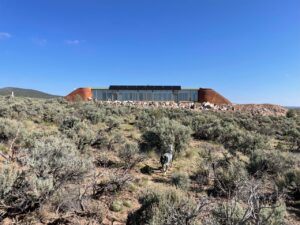
Reynolds, an American architect based in New Mexico, is best known for designing and building Earthship passive solar homes.
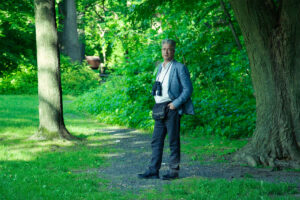
Steven Peck is dedicated to creating greener, healthier & resilient cities with nature & urban agriculture.