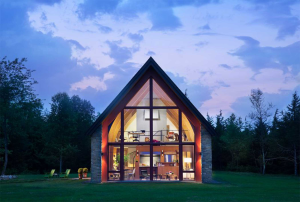
Alan Barlis – Founder and Principal of BarlisWedlick Architects
A pioneer in Passive House design.
Championing architecture’s potential to create an equitable and sustainable future.

U.S.A .
MARY-CLAIRE HARRIS SEPTEMBER 8 , 2025
Brisbane-born designer Julia Watson is the bestselling author of Lo—TEK, Design by Radical Indigenism and Lo—TEK Water, A Fieldguide for TEKnology, both cohesive and innovative works detailing the significance of traditional ecological knowledge in contemporary design. Watson is also Co-Founder of the Lo-TEK Institute and Living Earth Curriculum, both of which are dedicated to the implementation of ancestral wisdom into regenerative design and the empowerment of the Indigenous communities that make it possible. She co-leads the Lo-TEK Office for Intercultural Urbanism, a studio and consulting practice centered on nature-oriented design and vernacular infrastructure.
Watson has collaborated with museums, businesses, governments, and design firms to acknowledge the incredible potential of indigenous ecological technology and encourage its incorporation into contemporary design. She is both a TED speaker and a Long Now presenter, exemplifying the vast reach of her innovative work and the remarkable possibilities it holds for changing the world for the better.
Through her research on First Nations knowledge around the world, her educational work at institutions such as Harvard University and Columbia University, and the projects undertaken at her Brooklyn-based firm, Julia Watson Studio, Watson has led the global movement for climate-resilient design through Indigenous knowledge systems.
Mood of Living: Tell us about your childhood- did you grow up in a natural environment?
Julia Watson: I am living in Brooklyn, New York now, but I had a very atypical upbringing in Brisbane, Australia, which was a quiet little city at the time. My family is half Greek-Egyptian and half Australian, so we grew up in a really interesting, very ethnically diverse, inner-city area called the West End. That was where all the Greek, Vietnamese, Italian, and Filipino people lived alongside a big First Nations population, because that particular district, called Kurilpa, which means Place of the Water Rat, had always been a really important meeting ground for the Indigenous community. Back then, Australia was a very conservative country, and Brisbane was an extremely conservative city, but this was an incredibly diverse pocket, which was an anomaly.
I grew up playing with First Nations kids back in the ’80s, where we would run around the street barefoot, have expeditions through the neighborhood, climb in huge macadamia nut trees, and run along the Brisbane River. I travelled a lot between Brisbane and the Gold Coast, so I always had a deep connection with water.
MoL: What or who influenced you to study architecture and urbanism?
JW: I grew up in a typical old Queenslander house, very Arts and Crafts, but a very beautiful place that was built in the late 1800s. It had previously been owned by the eminent sculptor L.J. Harvey and was designed by the famous architect Robin Dods. I remember digging in the garden where I’d find little heads from sculptures. We had a big Venus de Milo statue in the front yard, beautiful ornate gates, and a letter box with a gargoyle face– where you’d put the mail into its mouth. I think growing up in that house made me interested in art and architecture.
My parents also had a lot of National Geographic Magazines, which became a lens to the rest of the world. I think Lo-TEK is a kind of homage to spending hours and hours pouring over the yellow spines of those National Geographics as a little kid and wondering about the rest of the world that seemed so far away.
MoL: Did your studies in architecture, landscape architecture, and urbanism at the University of Queensland and Harvard University lead you to traditional and indigenous technologies? Were there other influences?
JW: I reflect on that quite a bit because when I moved to the States to study, I thought, given the two countries has somewhat similar histories of ethnocides to their First Nations communities, there would have been an institutionalization of Indigenous knowledge systems in the US, that was similar to what I had been exposed to in Australia. This was absolutely not the case.
In my second year of architecture school at the University of Queensland, I took a compulsory seminar called Aboriginal Environments. In it, I had a project where I looked at a mountain that I had known my entire life in the hinterland of Brisbane. I knew it as one name, but I came to understand that it originally had another name and that it’s really a sacred mountain to the First Nations people, who had lived there for 40,000 years prior to colonization. That year was spent uncovering narratives about the land, country, and relationships to place that I had never been told. I call this period of time an unlearning of everything that I had known, most significantly the colonial history, of both the area I lived in and nationwide— and a relearning.
From that, I became interested in old historical accounts from colonial settlers who would write about their meetings and confrontations with First Nations communities. I would spend hours reading through and uncovering documents of what seemed like fantastical stories about their different belief systems and world views, and try to understand the concept of two diametrically different lived experiences in a single space in time. I was trying to wrap my head around these things that I had never before been exposed to. From then on, I didn’t want to study architecture anymore. So, I moved to a discipline that I felt far more encompassed the understanding about country and landscape systems, the multiple narratives that our landscapes embody, and the indigenous stories that are often untold, erased, hidden, or just ignored.
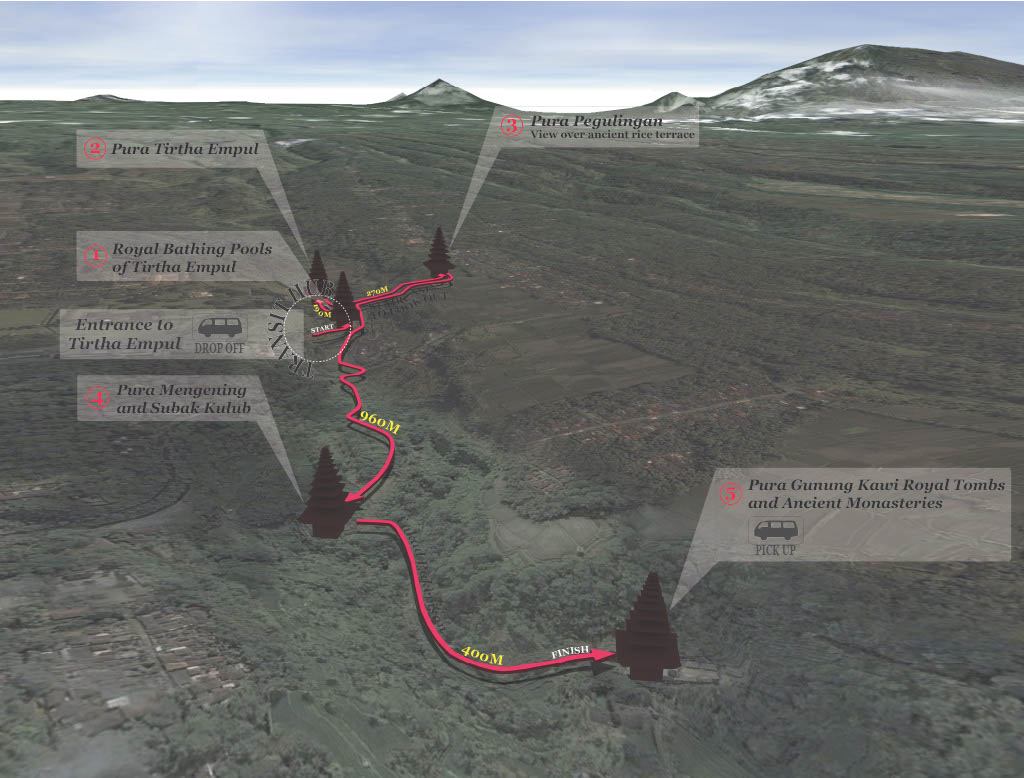
Sacred Spring Walk Map – Photography courtesy of Julia Watson Studio
MoL: What was your first job? What career path did you have before creating your own studio/institute?
JW: My first job was in landscape architecture. It was a three-week job that just never stopped. I was there for almost two years, setting up an office called PARC for a conglomerate of four different firms. At that time, they were designing the largest public park in the southern hemisphere, Roma Street Parkland. It was a reclamation project of an old train yard near the center of the city of Brisbane.
The job I had after that was really significant as well. It was with a really amazing small firm called John Mongard Landscape Architects. They were doing a lot of work with First Nations communities in Brisbane, but also a lot of landscape assessment. I went for a job interview because it was a small studio and a very coveted job. In the interview, John said to me, “What, in this discipline, are you not good at?” And I told him: doing construction details. And I wish I hadn’t said that. He had me doing that for about two years. It was really important though, because you tend to go with your strengths, so at that time I was able to build another strength. John also once gave me a sheet of paper with the alphabet and made me write letters because, at that time, when doing details and technical drawings, you had to label them as a computer would: incredibly clear and beautiful. Even to this day, I have beautiful handwriting.
When I was there, we worked on the first Eco Village that was constructed in Australia, Currumbin Eco Village. At the time, I was reading a lot about permaculture, deep ecology, and eco villages, as this was the time of the emergence of all these alternative modes of communal living. So, I was deep in that world and got to express a lot of those learnings in ideas for the master plan. It was a really special job because of the incredible breadth of innovative work that was coming into that office.
There was also very little work that was done on the computer. At PARC, I remember printing out these massive, eight-foot-long drawings and coloring them on the floor every time we would do a master plan update. You’re sitting there, hand-coloring with paints, pens, and colored pencils, shading in all the trees. It was a very different, almost traditional, artistic endeavor.
MoL: What inspired you to create your own studio? What was your purpose when founding the studio? What were the biggest challenges you faced?
JW: I worked in a bunch of practices. I moved to London. I worked in a practice doing extremely high-end residential projects and designs for people like Valentino–I did a haute couture design for his Holland Park residence. Then, I went back to Sydney and worked for CONtext + Conybeare Morrison, a really incredible firm in Sydney, for a couple of years, and then I got into Harvard. My proposal was to look at the contestation between sacred landscapes and Western conservation, specifically exploring why sacred landscapes were often far more successful at conserving landscapes than World Heritage Site status.
So, I went to the Harvard Graduate School of Design to specifically look at that. There wasn’t really a thesis program there, so I was an MLA II, which is a post-professional degree. When I came out of the GSD, there was a really, really bad global recession, and there were no practices that were looking at sacred landscapes or conservation of sacred systems, so I started teaching. I was asked by Kate Orff to teach with her at Columbia. Then I started teaching at RISD, then at Harvard, so often I was teaching at two or three schools and travelling between different cities. The top prize of the design school in landscape architecture at Harvard when I graduated was a traveling fellowship, and my proposal was to go to five different sacred sites around the world and to explore this concept, this question, of what makes a site sacred. I went to Tibet to look at Mount Kailash, a mountain that’s sacred to about a fifth of the world’s population, the most sacred space on the planet. I went there, did a study, and made a short documentary film. A scientist who was working in Bali on the rice terraces of the Subak saw some of my work, and he had just put in the proposal to get the Subak, the first World Heritage site in Bali, ratified. He said that he didn’t know what to do next with regard to tourism management and cultural conservation because he was just a scientist. He and I worked together for the Ministry of Education and Culture, trying to come up with a proposal for a tourism management and biocultural conservation plan. That was really why I started the studio, so I could do that project.
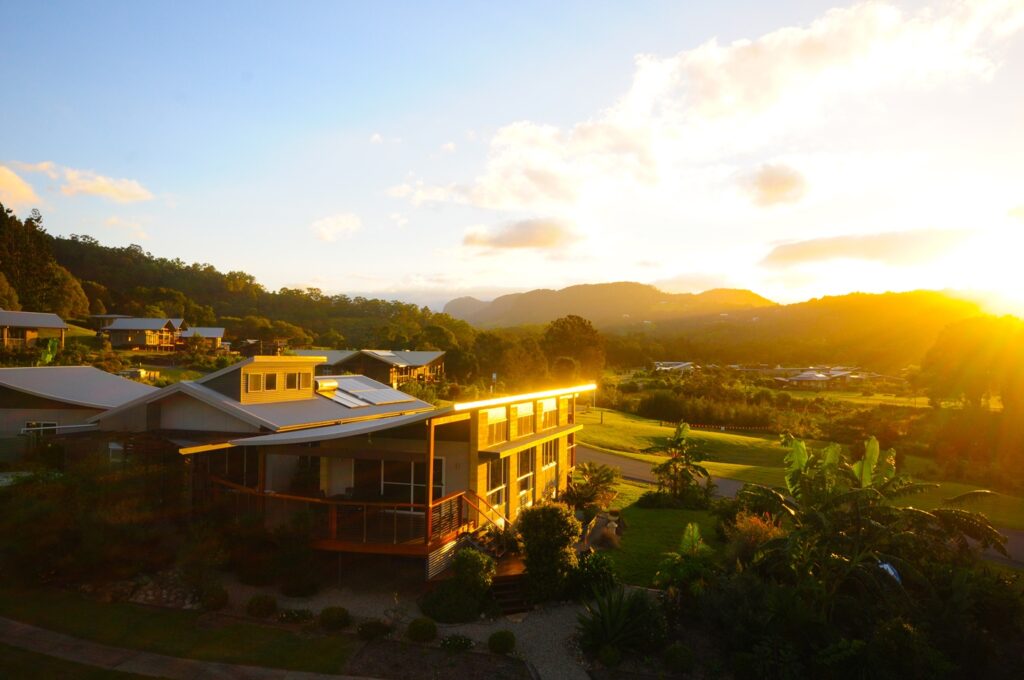
The Ecovillage at Currumbin – Queensland, Australia – Photography courtesy of John Mongard Landscape Architects
MoL: What is the studio’s process behind collaborating with architects, designers, local communities, global conservationists, museums, corporations, and governments? How do these collaborations benefit the design and implementation of your ideas?
JW: Every collaboration is extraordinarily unique. It depends on who our collaborator is and what the deliverable is for that particular project, whether it’s a museum exhibition, a writing piece, or a physical project that is being constructed. I think as a practitioner, you constantly keep on finding your space, like how that first project that I did in Bali was the kind of project that I knew I wanted to do. But those projects are few and far between. But, in the meantime, lots of other different opportunities have come up exploring that intercultural space of working in sacred landscapes, indigenous territories, and with Indigenous or First Nations communities. That’s always been where I was drawn to work– as a person who has been exploring what isn’t typical practice and trying to understand a set of negotiations that haven’t been documented, discussed, published or looked at by the field, I’ve just always been in that exploratory experimental phase—as a studio as well as a professor.
MoL: When and why did you co-found the Lo-TEK Institute? Tell us about it.
JW: I was pregnant with my second child. Lo-TEK had come out, and I found out that Lo-TEK was being taught as part of the nationwide AP program for high school. And I thought that was interesting because I wrote it for the profession. One day, I got an email from a high school teacher asking if I had ever thought about turning it into a curriculum. I hadn’t thought about a high school curriculum, but I was very interested in an educational program that would support indigenous knowledge centers around the world and connect them to universities or high schools. She said, “Do you want to look at working together and creating a curriculum for high school students?” I said to her, “I have been teaching for 12 years, and in that period of time, I have taught thousands of students, and of those students, I have taught maybe three or four indigenously ancestral identifying students.”
I agreed to creating a curriculum for high school students to understand, that in the dismissed histories of those Indigenous and traditional ancestral students, there is a pathway in the profession for their stories, for their land management practices, for their technologies and innovations, for their belief systems, that place them in an incredible position of authority in an emerging field of climate resilience in landscape architecture, urbanism, and urban planning. I felt that this work was a pathway to get more indigenous students into studying in the built environment.
So, we started working together. What we landed on in the end, which is called “Living Earth,” is a curriculum of more than 90% Indigenous-sourced material that can be taught as a subject over a three-year period and is now being taught in high schools and colleges. It’s even being used as a scaffolding for corporate learners in their professional development, so it’s become much more. From there, about six months after we launched the curriculum, there was a phone call between Melissa and me, where we said, “I think we need an institute.” That was last year.
Valentino Garavini Residence in Holland Park, London – Photography courtesy of Randle Siddeley Associates
MoL: Tell us about your second book, Lo-TEK Water, co-authored with indigenous experts from across the globe? How do you plan to expand upon your first book?
JW: When I wrote the first book, I expected not to want to write again—to just take a break. But I kept on writing, and the people who worked with me on the first book kept on writing with me, and we kept publishing articles. Something weird was happening because I kept on writing, and I couldn’t stop. So, I thought, maybe there’s a second book. I knew there was a first book inside of me– there was a book inside of me that I needed to get out into the world. And then, when I kept on writing, clearly there was another book.
Sequels often answer a lot of the questions that come up after the publication of a first book. I had learned a lot after publishing the first book, and I wanted to address some of the things that I’d learned and some of the protocols that I wasn’t aware of. I started from all the articles that I had written, I pulled those chapters together, and realized there was a focus on water, then I started pulling together at the other end, a list of contemporary TEK-infused projects like the chinampas in Mexico City. They were the foundation for the city of Tenochtitlan, which was the capital of the Aztec Empire. They have reduced and receded, but they still exist in Mexico City and clean about 60% of the wastewater. These stories, these technologies, need to be acknowledged.
So, this book is saying– it’s not the past. I wanted to show that there’s incredible innovation, and it’s in the present; it still exists. It’s just a system that has been handed down multiple generations. It’s deep knowledge that’s highly sustainable, highly resilient, beyond circular because it’s exponentially generative—and it’s the best of resilience. So that’s what Lo-TEK water is—not a rejection of typical practice, or a rejection of formal landscape architecture and its historical traditions. I’m saying, let’s not keep ignoring by calling one part of the built environment primitive or the past. Let’s build a language around all of it.
MoL: What did you gain from your time teaching and lecturing at institutions such as Harvard, Columbia, and RISD? Do you have hope that the next generation of designers will rise to the challenges of climate change and social justice?
JW: When I was teaching at Columbia in 2013 and 2014, I was coordinating seminars and studios on landscape technology. I started to look at the work that I was teaching and be a bit more critical of it, and I wanted to diversify the base of that work into information that I couldn’t find in books, but was drawn from my lived experience. In a seminar I was teaching, my first exercise for my students was to research, from their country of origin, a landscape ecotechnology, and document that. Nearly without fault, the next week, all of the students would come with a house and say, “This is a house of adobe or this is a house, etc., etc.” So I said, “No, we’re not looking at houses. We are looking at landscape ecotechnology, we’re looking at infrastructural systems.” They should come back the following week with an infrastructural system that performs ecosystem services, but is traditional. A student from China found the Hani rice terraces, and a student from India came back with the living root bridges grown by the Khasi people in Northeast India– both having never known these systems existed. The fact that you live in a country for the entire 24 years of your life and you have no understanding of this incredible infrastructural innovation because it was Indigenous– because it wasn’t published, because it wasn’t taught where you went to school, when you went to college in your country, in your architecture school, that’s what I wanted to address. I really wanted this whole built environment profession to address this incredibly colonial attitude that has meant not acknowledging indigenous and traditional knowledge systems as innovations for infrastructure and climate.
MoL: Have you ever had times where managing your own studio or writing your book felt like unattainable goals? How did you keep yourself from giving up in a world that consistently fails to support the environment and social minorities?
JW: I don’t feel that. I see it. I acknowledge it is happening, even more openly now, with the current administration in the US and the dismantling of so many vital and incredible systems that were established for First Nations, for new emerging indigenous technologies across the board. But I don’t feel like giving up, and I think that could be because I have a very global perspective, due to the nature of the work that I do. And when you have a global perspective, you can see patterns, and you can see distortions in a pattern. So, I see that in one space or in one nation, there is something happening. But in another place, I’ll see that there’s a great interest and a great movement forward. Maybe that’s just something that I unlearned a long time ago– that I don’t have a singular perspective of the world. Having that multivalent perspective of how the world works, how it operates. I’ve seen this movement evolving towards the foundations of my core belief systems—about the type of relationship that humanity should have with the planet and the way that our discipline should be working with environments and communities–that’s unshakeable. And so my practice has always been trying to move the world outside of me, more in line with the world inside of me. If the pendulum swings one direction, the pendulum will swing another, and we’ll keep on seeing these changes happening over time. That doesn’t change who I am, and that doesn’t change my belief system. It’s not the easiest path to choose. But for me, it’s the only path.
MoL: How do you see the technology of ancient living cultures being integrated into today’s world, which is increasingly driven by quick, short-term, and often unethical solutions?
JW: When Rem Koolhaas wrote “Delirious New York,” he had been in Europe, where there had been all this postulation, writing, and theoretical discussion about a certain type of urbanism. When he came to New York, he realized that it was there. All that they had been theorizing about in Europe was actually in this place called New York City. And then he wrote a book about it. What I’m doing with Lo-TEK Water is similar– writing about Indigenous ancestral systems that already exist and postulating that they could become our most resilient climate innovations. So, with this second book, I found those TEK-infused projects like Sponge City by Kongjian Yu and realized that our climate resilient urban infrastructures are already being infused with TEK, whether it’s acknowledged or not, which it needs to be. Sponge City is a model for urban revitalization and flood mitigation that’s known and being replicated across the globe. Yu is using traditional ecological knowledge as the foundation of Sponge City. So, it’s no longer a proposition that we can infuse traditional knowledge into the built environment in the future– it’s already been happening. It’s just not being talked about. Yu hadn’t really talked about looking at traditional knowledge systems, forms, and infrastructures and replicating those in the way that he was designing Sponge City.
So, this is happening, and we need to speak about it. We can’t keep ignoring it. We can’t keep this colonial view. We need to speak about how we’re being regenerative as a profession. What projects are achieving that, and how can this be replicated? How do we work with Indigenous communities reciprocally and respectfully? How do we give back to the community? How do we not just take these knowledge systems and replicate them? We’re not just analyzing works from the past. They are relevant now, they’re relevant in the future, and we’re doing it.
MoL: Building off of that, you mentioned in one of your TED talks that even when indigenous methods of infrastructure, like the water cleaning system in Kolkata, are recognized, their places and peoples of origin can be taken advantage of through more powerful organizations. Do you believe there is a way to prevent this?
JW: Part of writing Lo-TEK was identifying what I believe is incredibly vital climate technology, that is unacknowledged by particular administrations— the US now being one of the most prevalent. Climate technologies that can provide food and clean water, 80,000 informal jobs, and reduce emissions from transporting agriculture from the countryside into the city—all incredible things. If you look at these technologies as a holistic ecosystem, then these types of climate technologies should be incredibly valued.
We talk about the 21st century as the greatest loss of biodiversity— the sixth mass extinction—but I think that the 21st century will be remembered as a period of time when we lost the most incredible diversity of technologies on the planet because we had this idea that technology was industrial and high-tech, rather than acknowledging that it could also be local and composed of traditional ecological knowledge. Lo-TEK’s mission is really to create a platform that can be seen by a government official in India or Indonesia, who didn’t realize the incredible value of their local systems because they didn’t have a background in climate literacy or ecosystem sciences. If it’s spoken about in this context and it’s drawn in this way, it provides a global platform to lift these technologies to a level of solar or wind technology, which are known to be inherently incredible and valuable technologies. We should be lifting the East Kolkata wetlands to the status of a climate technology—a localized, incredibly unique innovation.
MoL: What advice can you give to someone interested in starting his/her own sustainable design studio?
JW: There are a lot of things that you need to get in place first. You need experience– to have worked in other firms. For me, I needed to be in my own space so I could explore and keep on testing myself and pushing myself to explore this field that I couldn’t quite see, but could feel was somewhere around me. I was trying to make it not only visible to me, but visible to the rest of the world. Having your own driving thesis or a passion in a specific field, especially as a landscape architect, is important. What do you want to explore within the profession? That thing that, when you’re in the middle of a yoga session or the middle of a run or while playing a game of tennis, pops into your head. How do you make yourself stand out in a profession where there are only a few of us? What is unique about you, and what are you bringing to the profession? You’re always going to have your bread-and-butter work that keeps your studio alive. But also, inside of you, you need the thing that you’re exploring to keep you there and keep you present, to keep you through the struggles that inherently come with starting your own studio. Figure out some funding. Get an award. Get a project. Have courage.
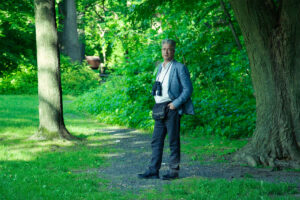
Photography courtesy of Julia Watson
A pioneer in Passive House design.
Championing architecture’s potential to create an equitable and sustainable future.
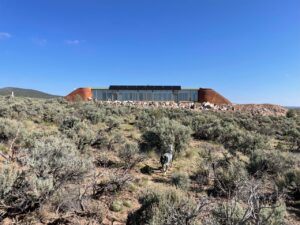
Reynolds, an American architect based in New Mexico, is best known for designing and building Earthship passive solar homes.
Steven Peck is dedicated to creating greener, healthier & resilient cities with nature & urban agriculture.