Aurora Robson – Environmental Artist and Founder of Project Vortex
Robson is dedicated to transforming plastic waste into vibrant and intricate artwork.

St. Agnes – Cornwall, UK
Caroline Chanfrau August 05, 2025
Anchored in his love for the sea, Tom Kay founded the outdoor apparel brand Finisterre in a flat above a surf shop in St. Agnes, UK, in 2003. The brand began with an innovative fleece, both waterproof and windproof, designed to keep the hardy British surfers in Kay’s circle warm. Now, Finisterre has achieved global reach, become B Corp certified, and continues to craft apparel for a life in rhythm with the sea. From their cliff-top workshop, the Finisterre team pioneered designs for functional, lasting, and sustainable clothing.
Sustainability isn’t just a value at Finisterre – it is a commitment woven into all they do. In 2021, Finisterre recertified as a B Corp, demonstrating its prioritization of sustainability and the environment in its business model. The materials used to make Finisterre products, including renewable and recycled textiles, natural fibers, Reprieve Recycled Insulation, and Yulex rubber, demonstrate how informed decision-making is embedded into their design process. Whether it is a wetsuit, a cardigan, or a beanie, Finisterre’s transparent supply chain ensures that customers know their products are lasting and have been created with a positive social and environmental impact in mind.
Beyond protecting the sea, Finisterre champions others to feel its transformative power. Launched in 2021, the Finisterre Foundation aims to reduce and ultimately remove barriers to the sea, enabling equal access to the ocean for all. The foundation has donated over 240 kits to ocean access causes, supports numerous charitable groups engaged in ocean advocacy, and empowers people to connect with the sea every day. The initiatives furthered by the Finisterre Foundation are enlightening and their impact profound: The Wetsuit Project has provided over 100 adaptive wetsuits with custom zips to individuals with disabilities that dream of catching waves and the 3% for Ocean Access ensures that 3% of every surf-specific wetsuit sale goes towards the project; The Seasuit Project has donated over 150 seasuits and hijabs designed by women for women, equipping them with a choice of what they want to wear in the water; The Level Water initiative plans swimming lessons for children with disabilities across the UK, even in cities. Finisterre’s community outreach does not stop there. The brand’s podcast, “Hell or High Water,” and the blog, “The Broadcast,” provide content for a community rooted in nature and activism on their website.
Mood of Living: Can you tell us about your childhood and where you grew up?
Tom Kay: I spent a lot of my childhood on the East Coast of the UK. I can remember my parents bringing me up and saying they wanted to bring my sister and I up to love the sea. That’s been in me for as long as I can remember – it was the boats, the windsurfing. When I was 15 or 16, I really got into surfing. Those formative years are about arts, music, or team sports, but for me, all surfing.
I went to the West Coast of the UK for school. Then I lived in London for a year and a half, and I think when things are taken away from you, you realize what you missed. I really missed the sea and that part of my life. I created Finisterre from my love of the sea and the belief in a better way of making products that would have an impact on business around sustainability and the ocean. Those are the founding kind of ingredients of the brand that you see today.
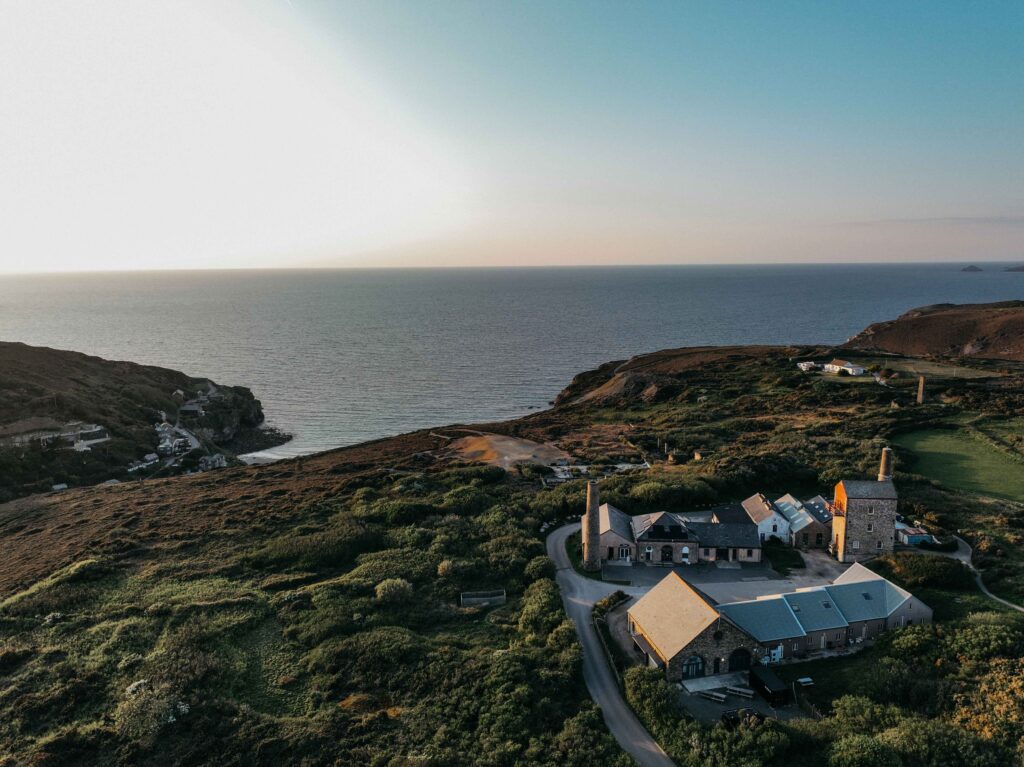
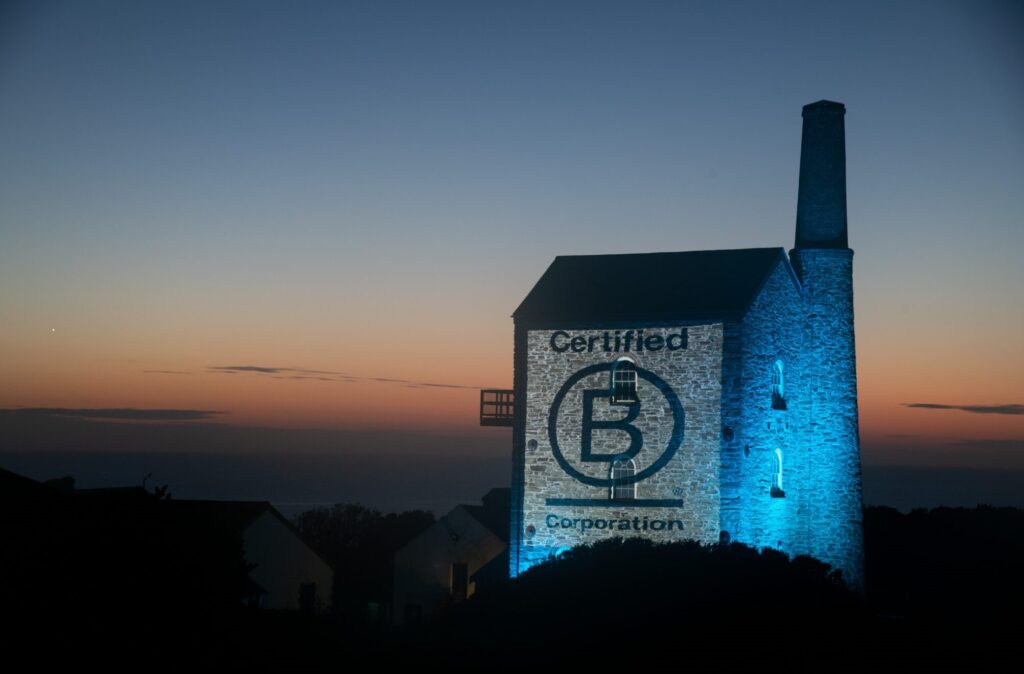
Finisterre’s cliff-top workshop in St. Agnes, UK.
MoL: Where did you go to school, and what did you study? Did you have any prior experience in business or designing apparel before founding Finisterre?
TK: I went to school on the West Coast of the UK, in Bristol. I did Biology with a marine focus; I spent years doing coral reef research and had zero business or clothing experience in my education. 25 years ago, the surf industry didn’t have any sustainability or transparency. So, since day one, we set out to be pioneering, drive change, have conversations and use the business to make an impact. Building product that you needed, that was built to last.
MoL: Finisterre’s cliff-top workshop is located in St. Agnes, UK. How did the St. Agnes surfing community and nature-oriented environment inform your vision for Finisterre?
TK: If you cut the brand in half, it’s the same on the inside as it is on the outside. That comes right down to where we’re located. You can walk out two hundred meters from the office and be on the rugged North Atlantic Cliff, you know—big seas. It’s the very environment for which our product and clothing is designed, so you can literally step out of the workshop and test them, try them; work out how to make them really fit for purpose. There’s romance too in terms of the sea, British, and nature of what we do. There’s real depth to the brand, that goes right down to our location and where we are.
MoL: Starting a clothing brand is no easy feat, but Finisterre has grown from producing a fleece in a flat to becoming a certified B Corp with a global reach. What steps did you take to successfully grow your brand, and who did you look to for guidance?
TK: I sat down and figured out what I was going to do and do differently, and there were guiding principles that carried us through a lot of the poor, mundane business needs. I never lost what the brand could become and where it could go – that sort of belief drives me through a lot of the troughs. So, it was really about having a clear vision and purpose since the beginning and sticking to it. For me, this belief was that we are born from a deep love of the sea and that there was a better way to make great product.
Finisterre’s products in and of the sea.
MoL: Looking back, what personal transformation have you undergone in parallel with the brand’s evolution? How have you kept your original ethos and fulfilled your original vision as an entrepreneur?
TK: I’m hopefully the same person I was when I started Finisterre. In terms of spirit, I think the brand is in the place it was 23 years ago, which is great. There are around 165 people in business now and 14 stores. We are growing internationally with a product range that includes natural rubber wetsuits, recycled polyester jackets, beautiful knits, and regenerative cottons. We are wiser, we know more, and can have a bigger impact while still driving hard to understand more. You go through stages where you grow up and really grow into who you are as a person; we’ve really grown into who we are as a brand.
MoL: Your connection to the sea runs deep and seems almost spiritual. How has this bond motivated you creatively? Do you feel inspired by nature?
TK: Yeah, I mean I think we all do. I do, definitely – just going and getting in the sea to have space and ground yourself in that respect. Every Tuesday, we start work at 10 a.m. and the whole business goes for a surf, swim or a walk with our kids, dogs or by ourselves. We really try to live and breathe the sea, remind ourselves why we’re here, hoping that makes us better – the brand, the teams, the culture.
MoL: Finisterre is steadfastly committed to sustainability and encourages a lasting connection with the sea. How do you personally define sustainability? What steps do you take to ensure that Finisterre abides by this definition?
TK: I think ‘sustainability’ is a very overused word now. We can look at sustainability as the needs that should be seen because the state of the planet and the world is not good. We as a business need to lead and be a poster example of what can be done – act as inspiration to a lot of people. Just sustaining it is not good enough. For us, B Corp is a really good framework, but we are always trying to do more than that: regenerative cotton, natural rubber wetsuits or the recycled polyesters we use in our jackets that comes from reclaimed fishing nets. It’s a long-term commitment, and even after 23 years we’re just getting started – we learn every day.
MoL: As the first B Corp outdoor clothing brand in the UK, Finisterre has become a leading example in sustainable apparel. Can you walk us through Finisterre’s journey to becoming a B Corp?
TK: We became B Corp certified in 2018, as I felt it was important to get an independent assessment that we are the sort of brand we are saying we are. We had always had sustainability and transparency at the heart of our business since founding in 2003, but wanted for this to be assessed through the B Corp’s certification process. It’s quite a rigorous process covering all areas of the business and its impact. But being certified is a great signal for our new and existing customers, for our team and our suppliers. We’ve now recertified three times, improving our score each time showing we are growing our business in the right way.
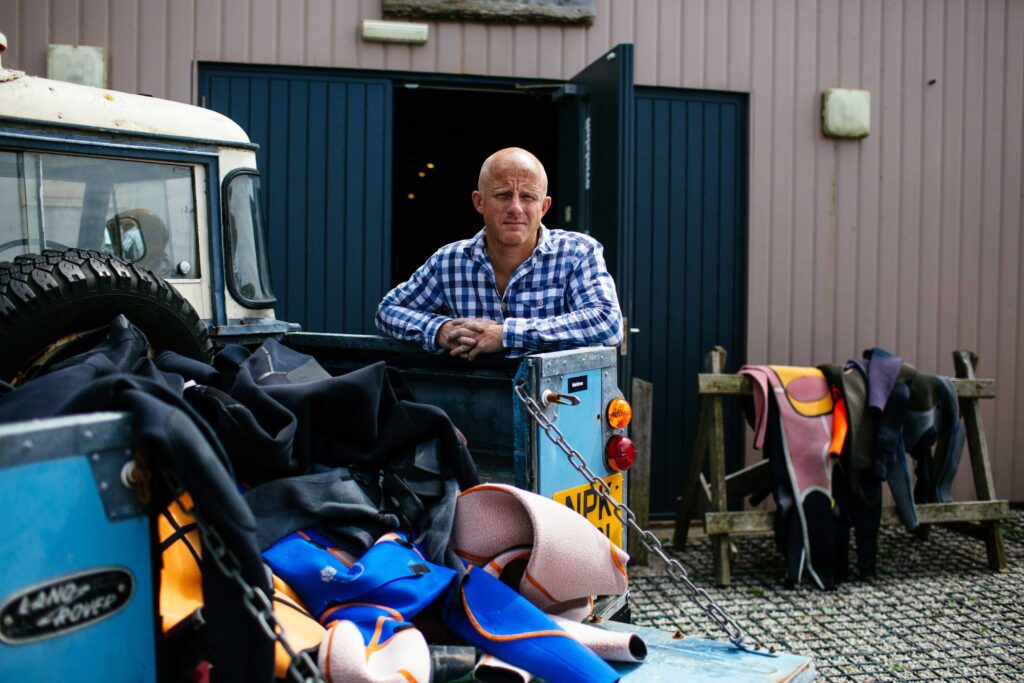
Founder of Finisterre, Tom Kay
MoL: Your company has its own foundation that champions for equal access to the sea and supports like-minded charities. What inspired you to take this philanthropic, humanitarian approach? How do you choose charities to bolster?
TK: Since day one, we have always supported the causes and organizations that we can – using the business beyond transactions to do good. About four years ago, we decided to set the foundation up, set by my wife and the team. One of the greatest privileges I have is that I have no barriers to getting to the sea. I can walk down the beach, I can get to the beach, I can afford a wetsuit, I can get into a wetsuit, I’m confident enough to go into the water. That’s my greatest joy in life and I’m really lucky, but for many people, it’s not a possibility. The foundation is a CIC that we use the business to support. We use the funds raised to help people get to the sea, people for whom there are barriers, lessons for kids in city areas who aren’t getting in the water. One of the biggest barriers for entry to the sea is actually getting into a wetsuit! So, we set up the Wetsuit Project where we use the foundation funds to adapt wetsuits for people that have difficulty getting into them with e.g. sensory issues or cerebral palsy. People can send in their wetsuits, and we adapt these suits for their specific needs, such as different zip positions making them easier to get on. That is what the foundation is really there for – reducing any barriers – and it’s something that I’m really, really proud of.
We always try to meet most of the needs of applications to the foundation. There’s a group of women in the Northeast who have lost their confidence or feel at risk getting into the sea and surfing. We support with wetsuits, or a kit, any way we can help. There’s also a group that’s teaching kids to swim in the city of London before they come down to the sea. We try to support as many as we can. There are so many amazing groups and charities that are set up to help people get in the sea and water. It’s a really good thing that we can use our business to support that.
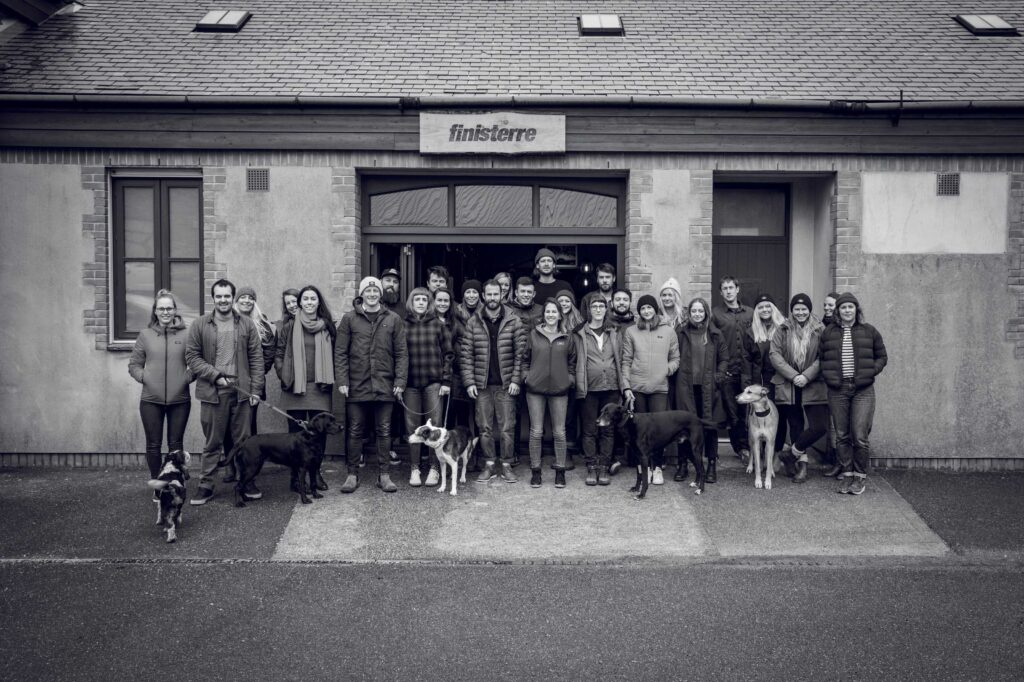
Finisterre’s Team
MoL: Finisterre provides full transparency when it comes to the sourcing of materials and manufacturing of its products. Why is the promise of transparency between Finisterre and its customers so important to the brand?
TK: Being transparent is something that we have always done, even when it was me in the beginning in a flat above a surf shop in St. Agnes, just making fleeces. It was always about honest conversations with our customers that gave way to designing better product, supported by a transparent and known supply chain. Generally speaking, when things are unknown in a supply chain, that’s where exploitation – environmental and social – happens. So for us, knowing as much as we can about our supply chain and then letting our customers know that – that has been there since the start back in 2003. We aren’t a perfect business. We don’t have all the answers, but we work really hard to move forward. With that comes sharing knowledge and information and it helps people make up their mind while educating them along the way. It’s the right thing to do, basically.
Finisterre – Fashion
MoL: Beyond the Finisterre Foundation, your brand has a podcast and a blog, both geared towards spreading the stories of individuals whose work embodies the spirit of Finisterre. What inspired you to incorporate an educational aspect into the Finisterre brand?
TK: We always try to tell authentic and honest stories. Again, if the business can be a platform for people to tell their story that can be an inspiration for others, then we always do that. It’s important that our stores are places that our community can go and spend time, talk and meet other people. The brand is a platform or a voice for what people are doing in the ocean space, conservation, activism, film, or photography; it’s what we are there for.
MoL: What about Finisterre makes you most proud?
TK: You get proud moments every day. And many on the journey. I’m obviously really proud of all of the people that have helped us along the way – there’s a really amazing team and so many talented people who have worked for Finisterre. They’ve helped take my ideas and make them into the brand. That’s not possible without a really great team behind you, so I’m really proud of that.
I also love seeing people out in our products. I remember the first time I saw someone who I didn’t know wearing our product. This was huge, like the business was really happening! These are still good moments, and I’ll often find out how that product is doing. Our store events are always good occasions too. Or when people stop to say how much they loved this bit of content or what the foundation does – great fuel for us to keep on doing what we’re building here.
MoL: What advice would you give someone aspiring to break into the sustainable apparel industry?
TK: Don’t wait. When you have an idea, don’t wait for it to be a nine or ten out of ten. Seven out of ten is enough to get going. I think it’s really important that you have your brand product difference laid out, your authentic point of difference, and sustainability is kind of table stakes now. If anyone is buying a business, they expect that. I guess it’s like: what are you going to do beyond being a business? This can be really powerful. People do look to businesses to be their voice, to be the change they want to see in the world.
Photography courtesy of FINISTERRE
Robson is dedicated to transforming plastic waste into vibrant and intricate artwork.
A pioneer in Passive House design.
Championing architecture’s potential to create an equitable and sustainable future.
Watson is dedicated to integrating indigenous knowledge into urban design and architecture to build a more sustainable and ethical future.